
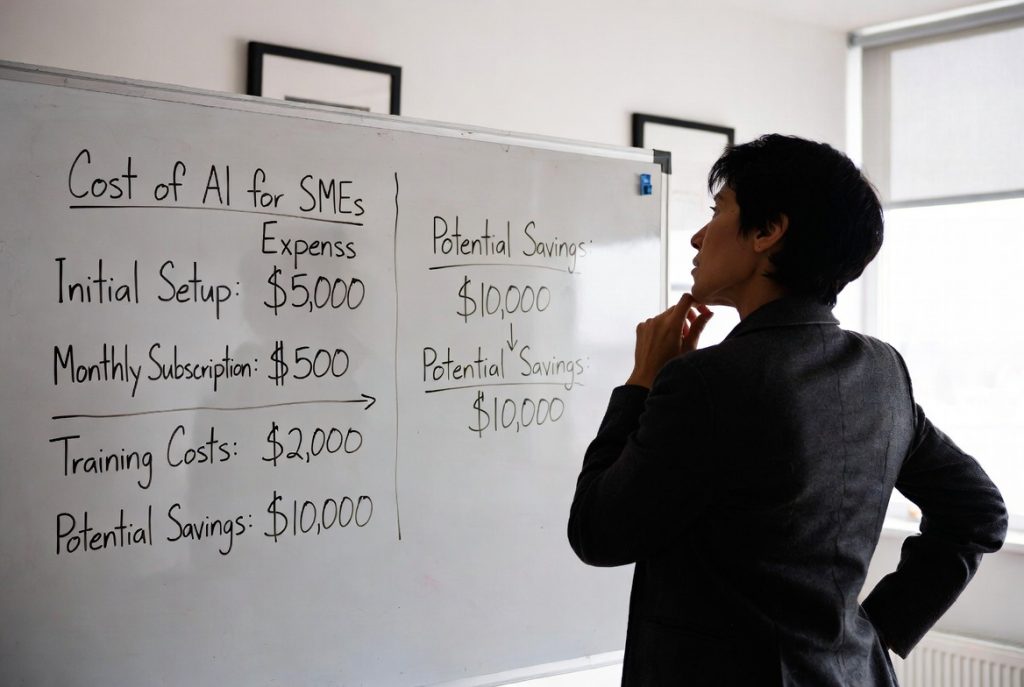
Ask most small business owners why they have not explored AI, and cost is often near the top of the list. There is a lingering belief that it requires a large budget, specialist staff, and a long, expensive project before any benefit appears. That belief is increasingly out of step with reality. The economics of AI have shifted, and for many smaller businesses the barrier is now far lower than expected.
Where the old assumptions came from
The fear of high cost is understandable. In earlier years, using advanced technology really did mean buying hardware, hiring scarce specialists, and committing to lengthy custom builds. Those conditions have largely changed, but the perception has been slow to catch up.
What has changed
Three shifts have brought the cost down. Cloud services replaced large upfront purchases with flexible, pay-as-you-go pricing. Ready-made tools removed much of the need for custom development. And accessible platforms reduced the reliance on hard-to-find specialists. Together, these mean a business can start small and scale spending in line with the value it sees.
Thinking about cost the right way
Rather than asking “how much does AI cost?” it is more useful to ask “what is this problem costing me now, and what would solving it be worth?” Seen this way, a modest investment that saves hours of admin each week, or helps retain customers who would otherwise drift away, often pays for itself.
- Start with a small, focused project rather than a sweeping programme
- Use flexible tools so spending scales with value
- Measure the benefit against the cost of the problem, not in isolation
- Grow your investment only as the results justify it
The honest answer is that AI no longer requires a corporate budget to get started. For many small businesses, the cost of a sensible first step is far lower than the cost of standing still. If you would like a realistic estimate for your situation, we are happy to help you think it through.